Karla Lagunas, On The Radar
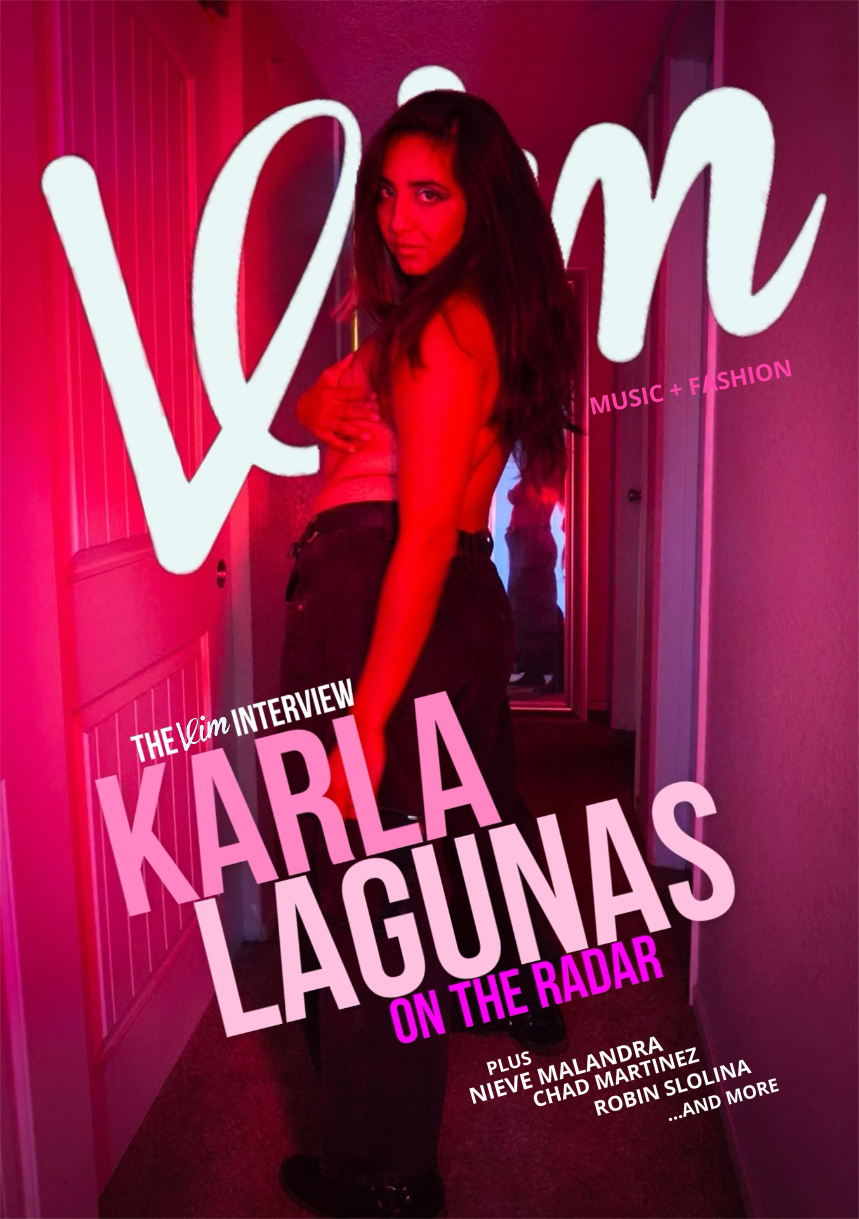
Interview And Photos by Jorge Lara
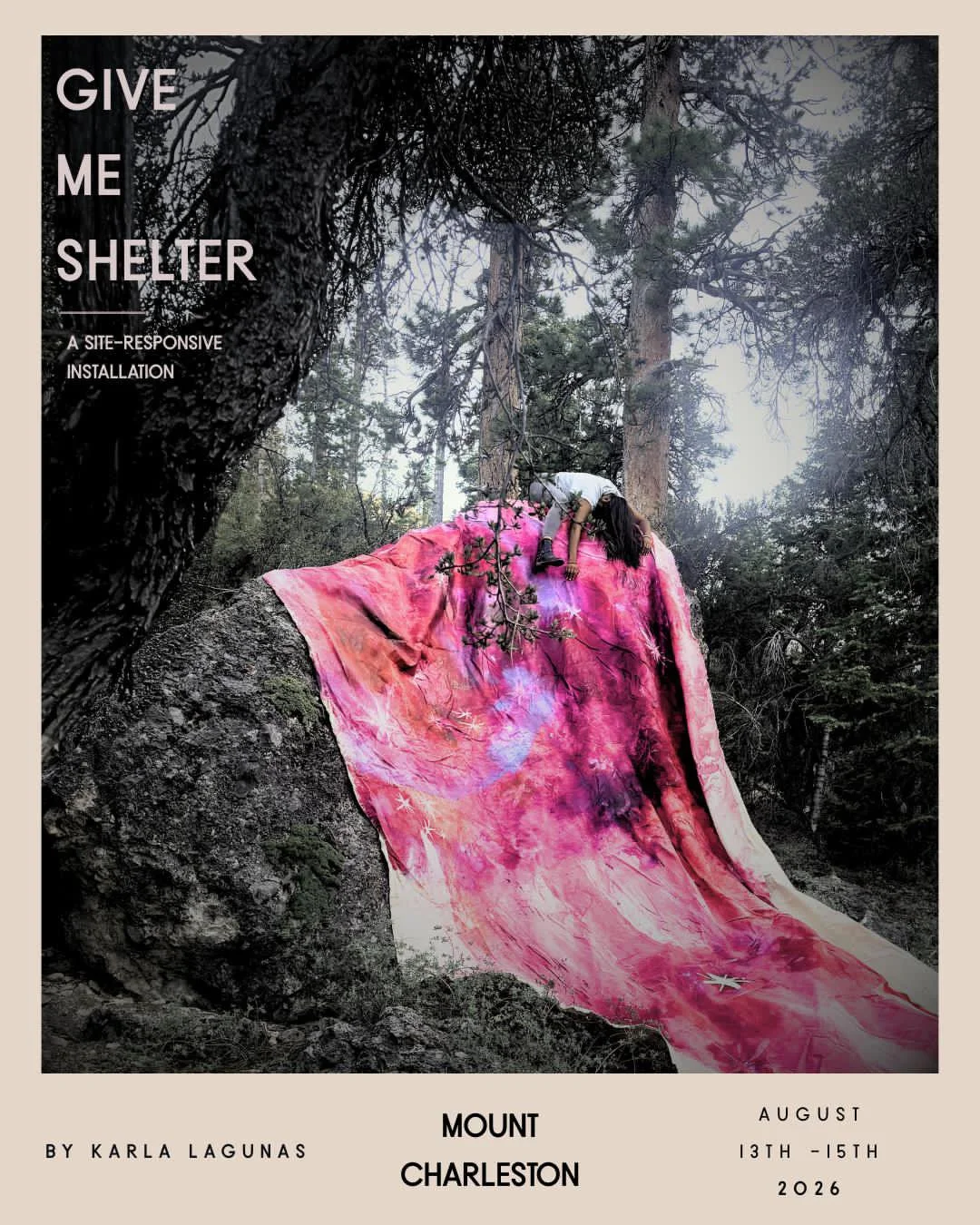
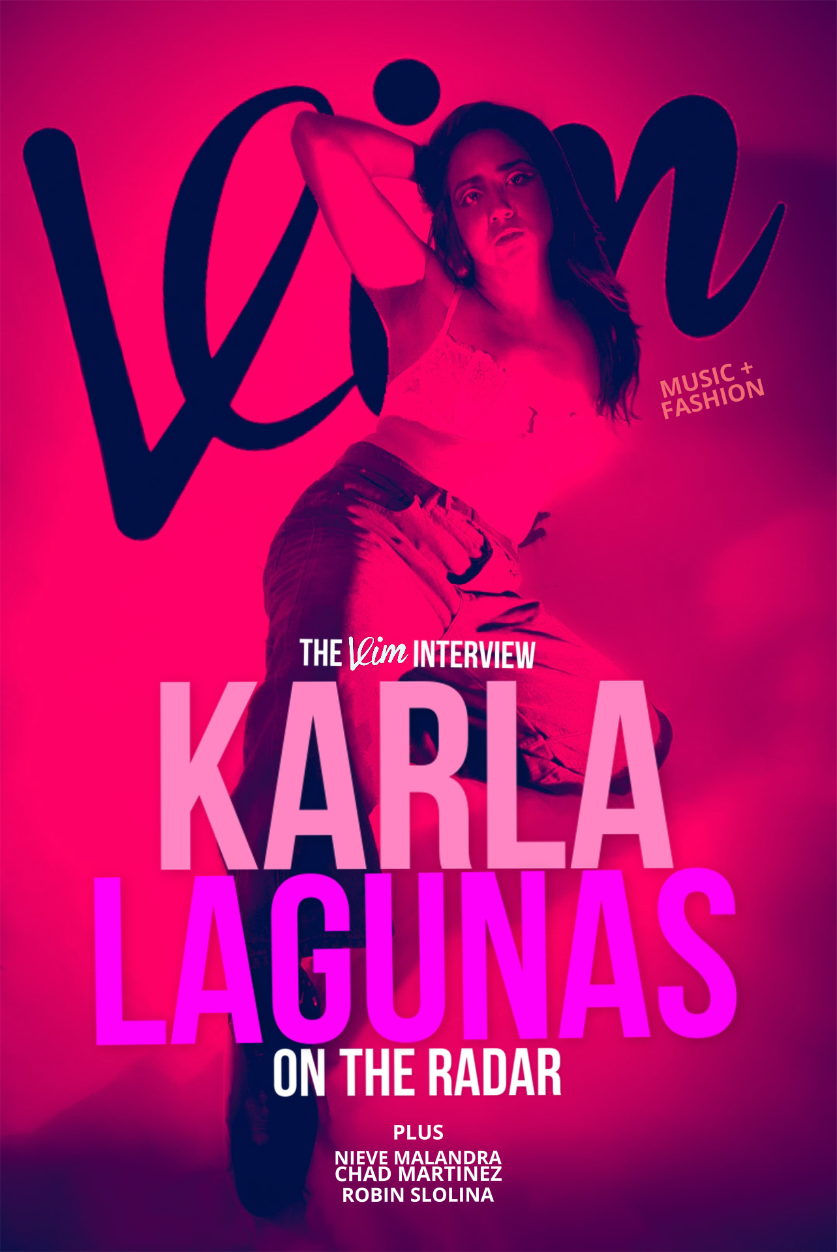
Vim Magazine’s fall season of interviews begins with acclaimed Artist Karla Lagunas. Lagunas who previously had a first-of-its-kind installation collab between Meow Wolf and UNLV’s College of Fine Arts in 2024 just had a new installation last month at Mt. Charleston entitled ‘Give Me Shelter.’ VIM Magazine’s Editor In Chief Jorge Lara had the opportunity to ask her about her latest installation, her process, her performance, and her responsibilities.
On the Project
Give Me Shelter is described as a site-responsive installation rather than an exhibition. What makes this project impossible to recreate inside a gallery?
I think my practice has always been about finding the edge of a system. Galleries have edges. Institutions have edges. Materials have edges. Bodies have edges. My instinct is to lean into those limits and see what happens. Sometimes they move. Sometimes they don't. The point isn't to escape constraints. I'll always work within them. The point is to choose which constraints are shaping the work. Give Me Shelter gives me the opportunity to exchange one set for another and see what kind of artist emerges.
“The mountain strips away a lot of the competencies I’ve developed as a city dweller. Suddenly I’m negotiating with weather, animals, darkness, and my own physical limits. ”
The title suggests both protection and vulnerability. What kinds of shelter are you most interested in exploring?
The more time I spent with the project, the less shelter felt like an object and the more it felt like a practice. I'm interested in shelters that emerge out of necessity. They respond to weather, to bodies, to exhaustion, to the people present. I think the better we're sheltered, the easier it is to forget how much work shelter actually performs. This project asks us to remember that our dependence isn't a failure, but a shared condition. Shelters that aren't expressions of mastery over a place, but rather negotiations with it.
This work developed through repeated visits to Mount Charleston. How did your relationship with the mountain change over time?
The mountain strips away a lot of the competencies I've developed as a city dweller. Suddenly I'm negotiating with weather, animals, darkness, and my own physical limits. There's something humbling about realizing how inadequate I am for survival. I don't experience that kind of reverence in the city. The mountain demands it. That changes every decision I make.
On Materials and Process
VIM: Your loose canvas paintings become shelter, structure, and even skin. How did those transformations emerge during the project?
KARLA: The transformations are still happening. I won't know exactly what these paintings become until I've lived and worked on the mountain. That's the point of a site-responsive practice. I've worked on loose canvas for years because it adapts. Growing up, I painted on fabric, old comforters, and found materials because that's what I had. That flexibility became part of the work. The canvas folds, stretches, hangs, shelters, and changes with its surroundings. On the mountain, whatever it becomes will be shaped as much by the place, my resources, and the limits of my body as by my own intentions.
“Over time, I realized rope was doing more than holding the work. It’s an incredibly overdetermined material. A lasso, a ship’s knot, a noose, a lifeline, all rope. It carries histories of labor, violence, care, restraint, navigation, rescue, and survival. ”
VIM: Rope functions as drawing, architecture, and survival. Why has such a simple material become so central to your practice?
KARLA: Rope entered my practice through institutional limitation. Many of the spaces I was exhibiting in weren't traditional galleries and had strict limitations on how work could be installed. Screws and nails weren't an option, so I started hanging paintings with rope. I loved the problem-solving of it. Every installation became an exercise in knots, tension, and gravity. It was a different kind of satisfaction than representational painting.
Over time, I realized rope was doing more than holding the work. It's an incredibly overdetermined material. A lasso, a ship's knot, a noose, a lifeline, all rope. It carries histories of labor, violence, care, restraint, navigation, rescue, and survival.
What keeps me returning to rope is that it never stops being useful. It remains a tool while carrying all of that symbolic weight. I love building little topologies where every element simultaneously holds and is held by another. The installation becomes a system of dependencies. Every knot redistributes force. Every connection changes the whole. I think that's a pretty accurate model for how I understand bodies, communities, and even paintings.
I would love to write a book called “Tautologics” and just incessantly fill it with bawdy puns about rope.
VIM: How do weather, gravity, and darkness become collaborators rather than obstacles?
KARLA: Wendy Kveck introduced me to Petra Lange-Berndt's Materiality in graduate school, and her discussion of complicity with materials immediately resonated with me. It gave me a vocabulary for an ethic I had already developed through making. I've always been promiscuous with materials. I move between them easily, testing their limits, learning their tendencies, and discovering the kinds of relationships they invite. I don't see materials as passive or as neutral vehicles for an idea. They enter the work with their own histories, dispositions, and capacities. They resist, surprise, and redirect the work.
I think of this as an ethic rather than a methodology because it describes how I choose to relate to the world. It's a practice of responsiveness. Instead of asking how a material or a place can serve my intentions, I'm asking what it asks of me. Give Me Shelter extends that ethic beyond rope and canvas to weather, gravity, darkness, terrain, and the mountain itself. The work isn't responsive because I'm chasing unpredictability. It's responsive because I believe the conditions of a place have agency. If I'm serious about building a relationship with the mountain, then I have to allow that relationship to change the work—and me.
VIM: What surprised you most once you began working outside the controlled conditions of a studio?
KARLA: That is a funny question because I've never really worked in controlled conditions. I didn't really have a studio until grad school. I painted in my parents' backyard. The patio is still stained magenta. I've activated dye with rain over rocks and melted beeswax in the August sun. Last November I lit a canvas on fire and soaked it in Lake Mead. It’s nothing new for me.
The real departure is that I'm asking my paintings to become a real shelter. They have to care for me. They have to care for other people. That's never been true of my work before. I don't know exactly what that will ask of the paintings or of me yet. That's the project.
On Performance
VIM: You describe the project as "anarchistic calisthenics." What does that phrase mean to you?
KARLA: I borrowed the phrase from James C. Scott's Two Cheers for Anarchism. He describes "anarchist calisthenics" as small, everyday acts that keep our capacity for disobedience alive. That idea stayed with me because I don't think freedom is something we inherit or suddenly arrive at. It's something we practice.
“If freedom is a muscle, then I think artists have a responsibility to keep exercising it. ”
The systems we participate in inevitably shape us. Galleries, universities, jobs, grants, they all cultivate habits, values, and assumptions. I'm not interested in rejecting those systems for the sake of rejecting them. I work within them all the time. But I don't want to mistake their logic for the limits of my own imagination. If I never exercise another way of working, I risk never believing another way is possible.
That's how I understand anarchistic calisthenics. It's a self-imposed exercise in reorganizing responsibility. I'm interested in practicing temporary ecologies where labor, care, and attention circulate differently. The mountain asks me to be responsible to weather, to the people sharing the work, to the land, and to my own body. Those responsibilities become my artistic practice.
If freedom is a muscle, then I think artists have a responsibility to keep exercising it. Every project is an opportunity to ask whether we're reproducing the world we've inherited or rehearsing another one.
VIM: How does your body become another material within the installation?
KARLA: My body becomes another agent within the installation. It doesn't stand outside the work directing it. It is subject to the same conditions as everything else. My body responds to weather, gravity, exhaustion, and time. So does the canvas. So do the visitors. So does the mountain in its own way. We are all bodies in dialogue, each shaping the others. The mountain simply makes that dialogue more acute.
VIM: What role does endurance play in your artistic process?
KARLA: It is the process of Brown Ambition.
Endurance has always been important to my work. I grew up surrounded by people who worked incredibly hard. That labor was real, and it was necessary. What I've come to appreciate is that hard work alone has never been enough.
My parents endured because they were devoted to something larger than themselves. They leaned on family. They accepted help. They imagined another life was possible long before there was any evidence that it would be. I think that's true of most of us. We don't endure through strength alone. We endure because we're held by other people, by our commitments, and by the futures we're trying to build.
I want to make that visible. We celebrate labor because we can see it. Devotion is quieter. Community is quieter. Imagination is quieter. But those are the things that make extraordinary endurance possible.
VIM: Does performing in an unpredictable environment change your relationship to risk?
KARLA: I think control is an illusion. The mountain is no more predictable than the city. The only difference is that when the mountain tries to kill me, I have a reverence for it. I'm ready to receive it. I know I'm at the mercy of forces much larger than myself. Forces we convince ourselves we can conquer when in urbanity. The city asks for a different kind of vigilance. Its dangers are social. Annihilation looks different there. I'm at the mercy of a different set of animals.
On Place and Responsibility
VIM: You've said that choosing the mountain replaces one set of responsibilities with another. What are those new responsibilities?
KARLA: The mountain reorganizes my responsibilities. Stewardship becomes a primary concern. I move through the landscape with care, remain attentive to nearby campers, prepare for emergencies, and stay in conversation with the limits of my own body. I also become responsible for the people who choose to join me there. The installation grows out of those obligations. Every material choice, every shelter, every performance emerges from that ethic of care.
