Photo and Interview by Jorge Lara (@world.of.jorge)
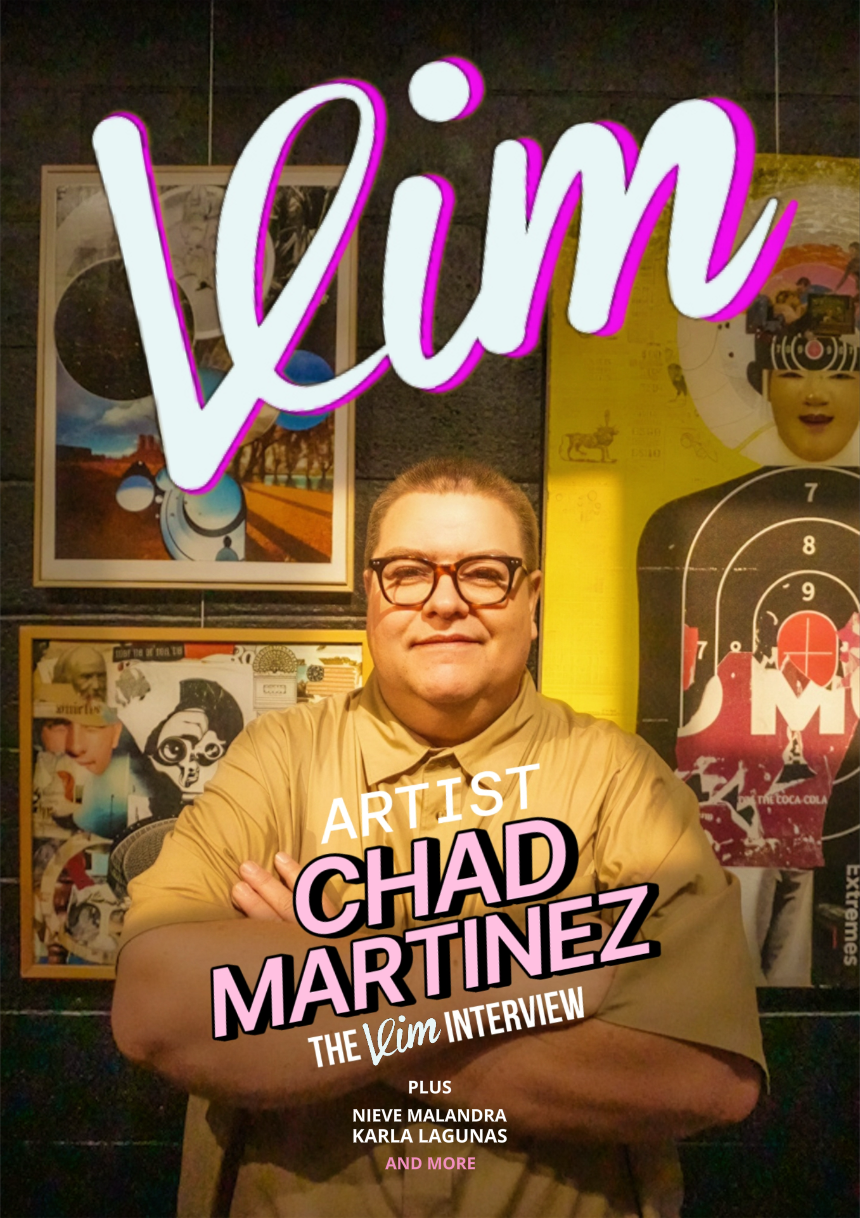
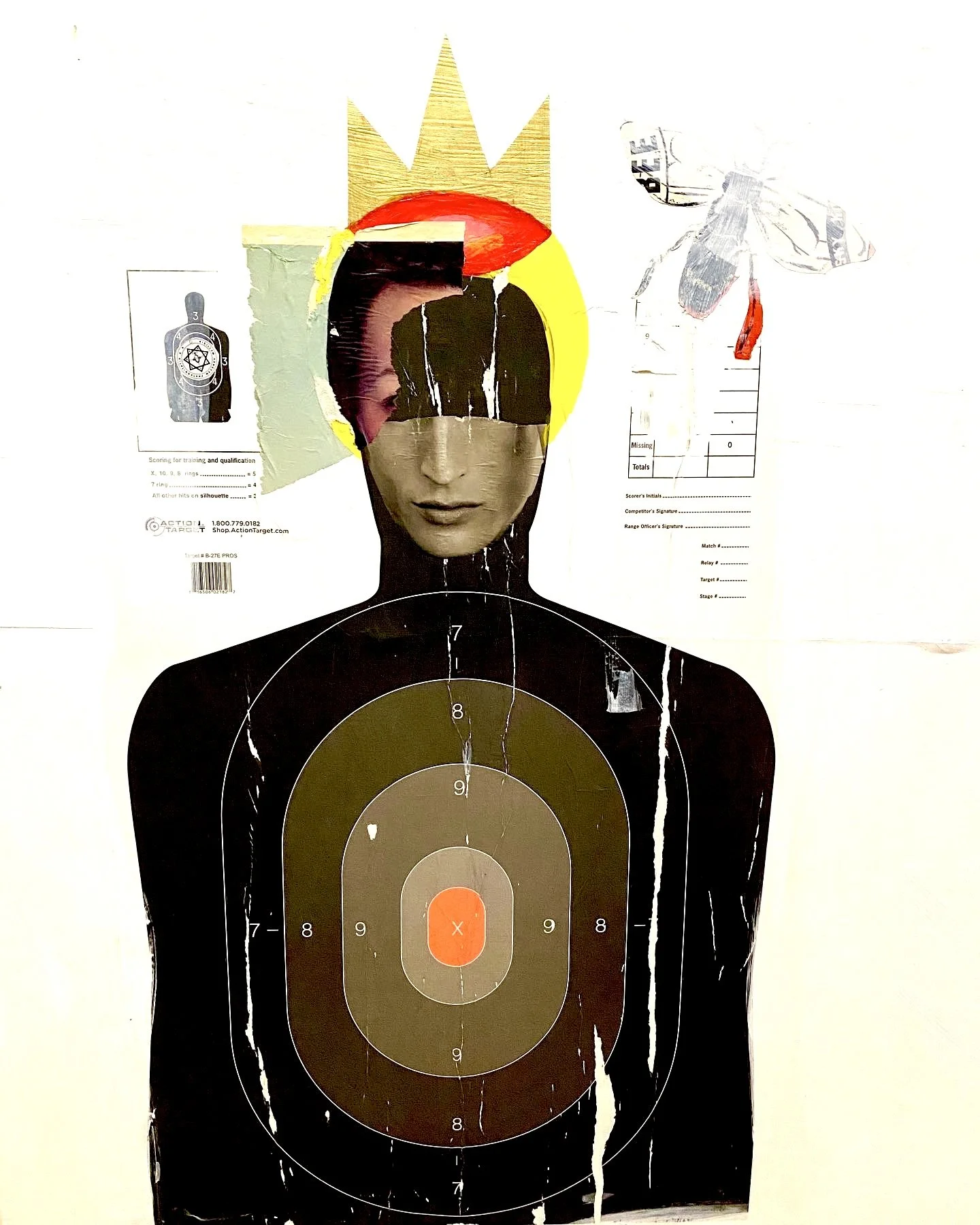
Our VIM Magazine fall interviews continue with Chad Martinez. Chad Martinez is a Las Vegas-based artist, DJ, and marketing specialist. He is a Nevada native who has lived in Las Vegas for over 20 years and studied photography and art history at the Academy of Art University in San Francisco. He has been involved with Las Vegas's music and radio scene, including Future Sound on KUNV 91.5-FM and local arts events in the Downtown Arts District where he is a Las Vegas-based collage and mixed-media artist.
VIM: How have your experiences as a DJ influenced your approach to visual art and collage? Do you see parallels between mixing tracks and mixing visual elements?
CHAD MARTINEZ: Absolutely. In the late ’80s, I became fascinated with hip-hop and sample-based music, which felt like collage: making something new by reshapingexisting material. Cutting, layering, and recontextualizing sounds closely mirrors visual collage. I’ve always been drawn to artists who use technology in ways it wasn’t originally intended, like turntables. The record player is over 100 years old, yetsomeone discovered it could become an instrument for creating entirely new forms of music.
When I moved to San Fransico in the late 90s it was at the height of the rave scene and I pretty much dropped out of art school to go experience that culture to the fullest. Bay area artists like the Invisibl Skratch Piklz and Hardkiss Brothers seemed like alchemists to me.
VIM: Was there a defining moment where you realized art would become your central focus? What was that moment like?
CHAD MARTINEZ: I’ve always created art as far as I can remember, but I was never comfortable calling myself an “artist” until my late 30s, when it became ridiculous to have a house full of my art, doing art every available moment, and still be like “it’s my hobby.” After the death of my friend and art mentor Bob Bruman, it was like a flash. I am an artist, and I didn’t need to wait for anyone to give me permission. If you are doing art consistently you are an artist. Most artists I know have day jobs. Obviously the ultimate dream is to make enough money to solely make art as your profession but it’s never been why I do art. I would later go into marketing because I felt I could be creative and make a living. I am happy having a life and career that allows me to continue doing art.
“After the death of my friend and art mentor Bob Bruman, it was like a flash. I am an artist, and I didn’t need to wait for anyone to give me permission.”
VIM: Generative art and collage are both about transformation and recombination. How do you approach boundaries versus spontaneity in your work?
CHAD MARTINEZ: As a tool, not a shortcut.
This is a loaded question, and I understand why many creatives are deeply skeptical of AI. Unfortunately, the current conversation around AI art is often really dumb. It distracts from the more urgent questions we should be asking about ethics, ownership, transparency, and who benefits from the technology.
‘Technology and Artistic Boundaries’
As an artist, I would never rule out using any available tool. The argument that AI is somehow “inhuman” sounds familiar; historically the same claims appear whenever a new technology enters the art world. When sample-based music emerged in the 1980s, people said it was not “real” music and called it theft. Yet sample artists pushed the boundaries of technology and helped create entirely new forms of expression and a new model that protected musicians.
‘Protection, Regulation, and Artist Agency’
I believe we need strong, enforceable laws that protect artists and incentivize them to keep creating. Those issues will have to be worked out through courts, regulations, and public policy. But I do not see how that happens if artists refuse to engage with the technology or test its limits. Artists have an important role to play in shaping how these tools evolve.
“What Generative Art Actually Requires’
If someone thinks generative art is just a robot waking up, pressing a button, and producing art, they probably have not used the technology seriously as part of an artistic process. AI already appears throughout digital life. If you are reading this on a digital platform, using spell check, or accepting grammar suggestions, you are already using AI. I'm required to use it in my job. So the question, for me, is not whether to use it, but how to use it thoughtfully.
‘A More Honest Conversation’
I am skeptical of self-appointed arbiters of “real art.” Many of my artistic heroes were dismissed by their contemporaries as destroyers of art. Technology itself is not inherently good or evil; it has the potential to be both. Right now, AI is being developed recklessly and largely for the benefit of a small group of powerful people. I support calls for a moratorium, greater transparency, and enforceable protections. But pretending the technology does not exist will not help artists. The conversation needs to move beyond “AI bad” if we want meaningful protection and real benefits for creative people.
“Many of my artistic heroes were dismissed by their contemporaries as destroyers of art. Technology itself is not inherently good or evil; it has the potential to be both. ”
‘Analog First, Digital When Useful’
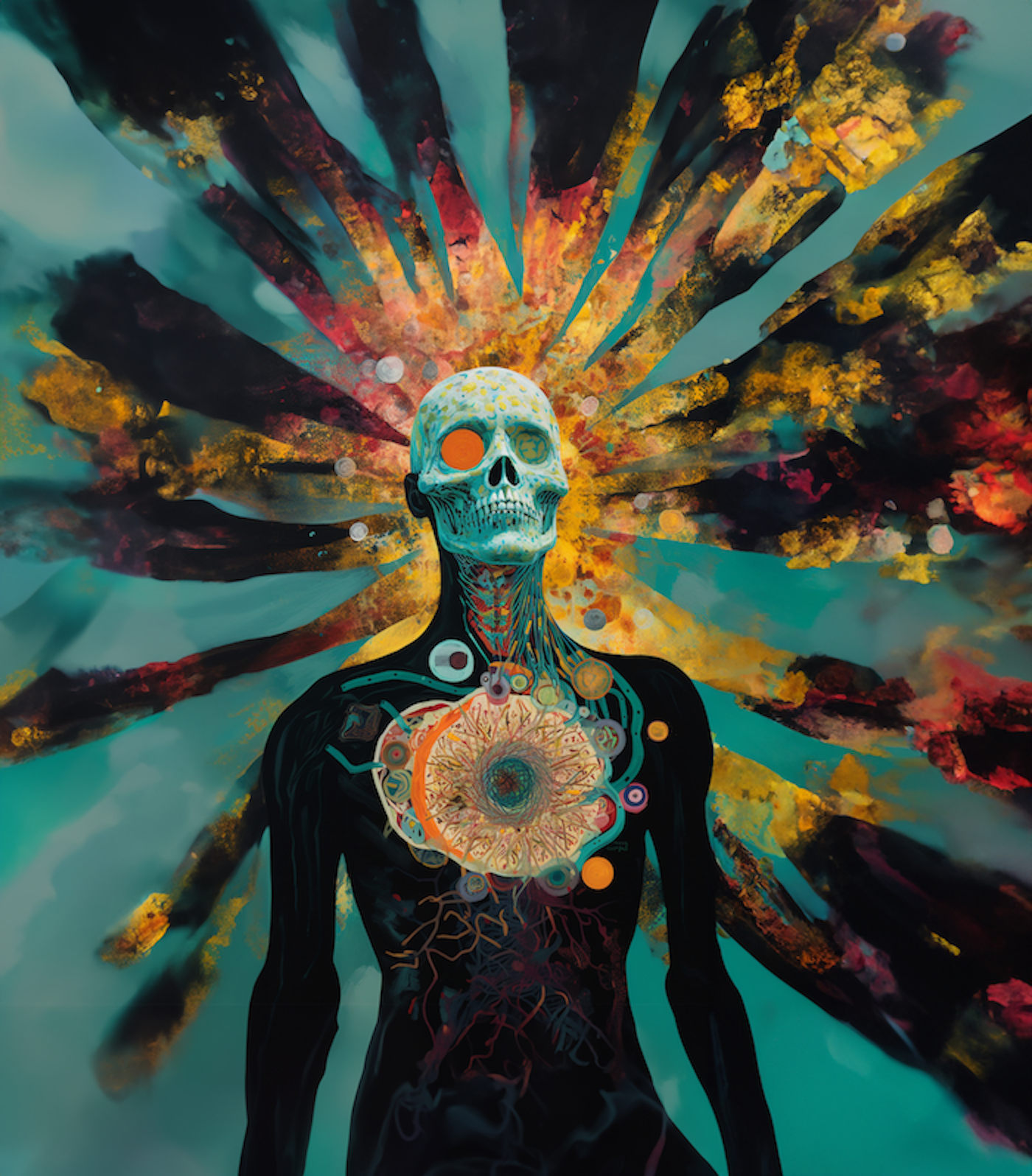
When I do use AI, which is far less often than I use analog methods, it is usually in combination with hands-on processes. For me, it is one tool among many, not a replacement for the work, judgment, and intention that art requires. It’s hilarious to me when artists, whos work looks super derivative of Basquiat or Haring, cry about theft. I even got in a heated comment war with a person (non-artist) in a found art group. Literally arguing that it removes the human element in a group of people who love found art that had no human creator. Art is more than pretty pictures, it’s ideas and uncomfortable conversations too. I strongly suggest people read the writings of Marshall McLuhan, if they haven’t already.
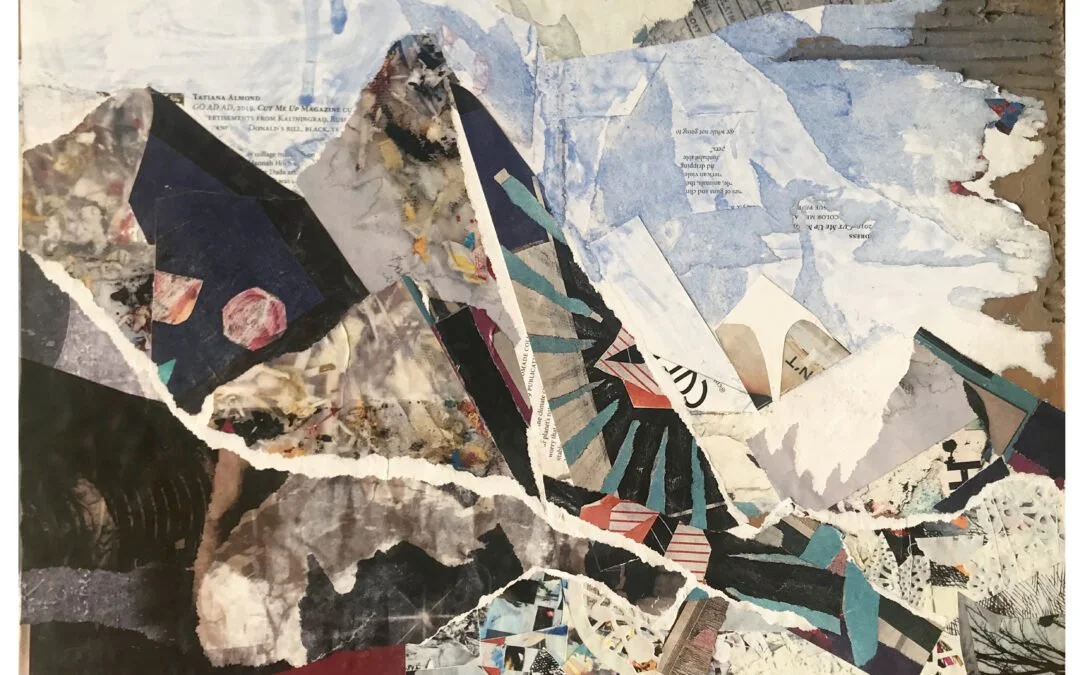
VIM: What role does chance play in your artistic decisions? Do you intentionally invite randomness into your process?
CHAD MARTINEZ: Chance to me is divine. You hear artists talk about “happy accidents” that can really elevate a piece. But deeper than that I think randomness or chance comes from a mystical place. The chaos behind (and part of) the order of the universe. I admire artists like John Cage who used the I Ching for composing some of his work or Burroughs using the cut-up method as a divination tool.
Community, Collaboration & Las Vegas Collage
VIM: How did your involvement with Las Vegas Collage begin, and what does the collective mean to you personally and artistically?
CHAD MARTINEZ: The collective began as four friends getting together to establish a nucleus for artists interested in exploring not only traditional collage but video and sound collage. Collage beyond crafting. We gained a bunch of members quickly and were able to do some pretty awesome shows. That evolved into semi-regular collage making events at different locations. Then there came a time when several members moved or wanted to focus on other areas of their lives and I was essentially the only one left. I might have given up on it if it weren’t for Noel and Michelle of SPCKRFT. They gave us a space to create and a home for a rather large collage library. There at SPKRFT and under Michelle’s stewardship, the collage events started to attract some extremely talented mixed media artists. Heading into our third year, it really has become a nebulous, decentralized collective in the realest sense. However, there are plans to formalize a board or small group of officers that can make sure and keep the events going and find spaces for mixed media exhibitions. The goal is to maintain a truly collective ethos but any organization needs structure to survive. It’s really the people that show up that make the collective. That is the only requirement to be a member.
VIM: What’s your most unforgettable exhibition experience — whether for better or worse?
CHAD MARTINEZ: The first time my art was selected for a show was for an “Occult Salon” art show in Perth Australia. The curator, Robert Burratti, is an amazing artist and owned an upscale gallery there. I was beyond thrilled. Only problem was I had to ship a fairly large and heavy canvas in a short time. It was expensive and upon return it got caught up in customs and they required even more money to release it. I decided not to pay the extra money and I thought it was lost. Eventually, months later, it did show up.
VIM: Do you see sound and visual art as separate languages or extensions of the same creative impulse?
CHAD MARTINEZ: I was lucky to host a music radio show I developed for KUNV 91.5 FM for over ten years. I also worked as a vinyl buyer at a mom and pop record store during the same period. I don’t see audio and visual arts as the “same language,” but rather complimentary mediums. A lot of my influence as a visual artist comes from album covers, especially the post Hipgnosis era of album art.
VIM: You are currently working on an art campaign you are putting together for a law firm, how did that come about?
CHAD MARTINEZ: Yes, I am the CMO for Jerez Law and the CEO, Attorney Isaiah Jerez, tasked me with coming up with a creative way to use a billboard based on an idea he got from an attorney back East who held contests for people to use his billboard then later started donating the space to charitable orgs. I immediately thought of my friend Paco who is embedded into the art district and is a professional curator and he agreed to come as a partner with his company Psionic Art Works. The Attorney loved the idea and really invested in the project (billboard and monthly updates are crazy expensive) It’s been a great success, so much so that we have extended the Art Billboard project into next year. Later I would discover that I wasn’t the first person to have thought of the idea, as a handful of similar projects have been done in other cities. However, it was important to all of us that the project not be exploitative and to genuinely engage artists and provide as much value as we could in exchange for sharing their art. We wanted to make it as passive of a process for the artist as possible, not requiring new work or themes.
